
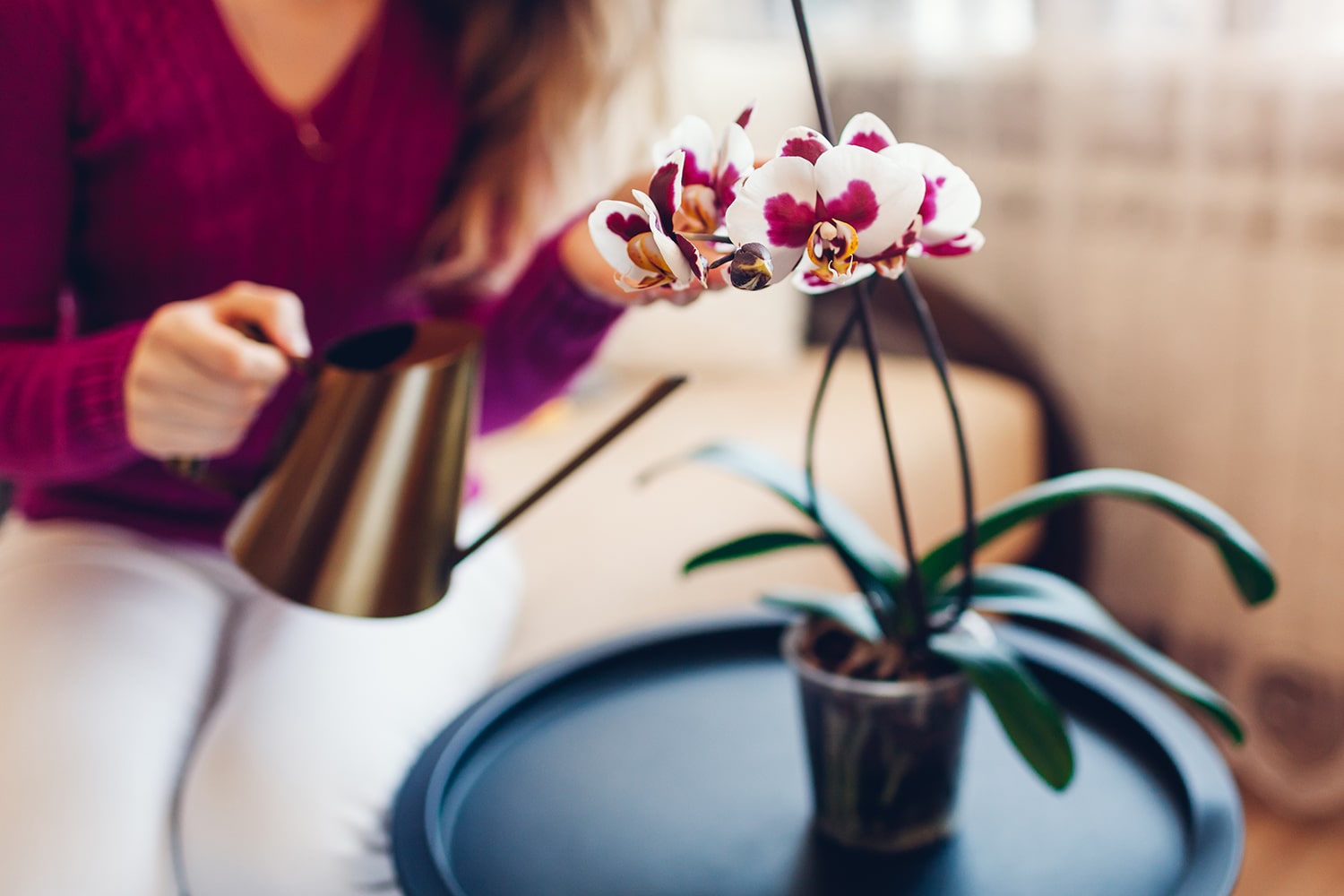
Before discussing care tips for a newly bought orchid, we want to address a subject that may be even more important: choosing the orchid.
What should we look for when buying an orchid?
If you can choose a plant in person, look for roots inside the pot and leaves in good condition. Healthy roots are grey when dry and green when they do not need water. Leaves should be firm and lively, without signs of yellowing, blackening or rot at their bases.
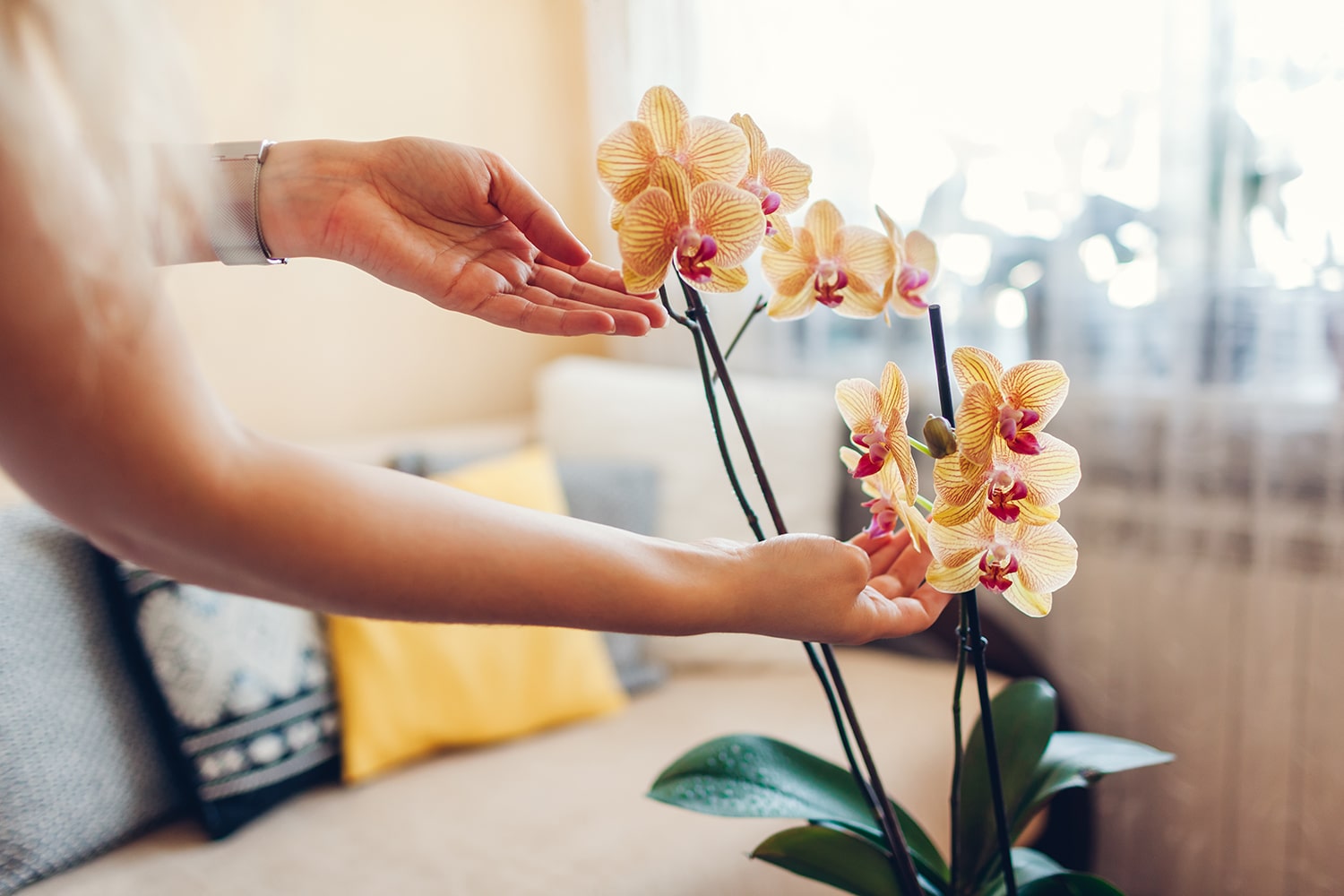
I bought a new orchid. What should I do?
Leaving a newly arrived orchid in its bag for a few hours can help it adjust to the air in your home. A gift orchid may be different: without knowing the care essentials, keeping it in its decorative wrapping as received can lead to losing it quickly.
After taking the orchid out of its bag, check root colour inside the pot and water if needed. Grey roots indicate a need for water; green roots do not. See our watering guide for details. Related guide
Should a newly bought orchid be repotted?
Orchids are epiphytes in nature: plants that use their roots to anchor to tree branches or hollows. They naturally grip their pot and growing medium. Once roots have developed sufficiently, suitable conditions allow them to invest energy in flowering.
Repotting before the roots have filled the pot can affect the orchid or delay flowering. Do not rush to change the pot or medium if the roots have not firmly filled it. This may take 2–3 years after purchase, so new orchids usually do not need immediate repotting.
Find more detailed information about repotting and changing the orchid’s medium here.
The importance of leaves in caring for a new orchid
Another recommendation for a new orchid is to add 2–3 drops of lemon juice to a glass of water and wipe both sides of its leaves with cloth or cotton. The article describes this as helping leaves look cleaner and brighter and protecting against harmful insects.
Place your orchid in a suitable environment
Finally, choose a bright place near a window with filtered light rather than harsh direct sun. This helps the orchid remain in flower and continue healthy growth. For more detail, see our earlier article about the orchid’s natural environment. Related guide
Subscribe to the Solo Plant YouTube channel to follow our latest orchid care videos. Related guide
Comments