
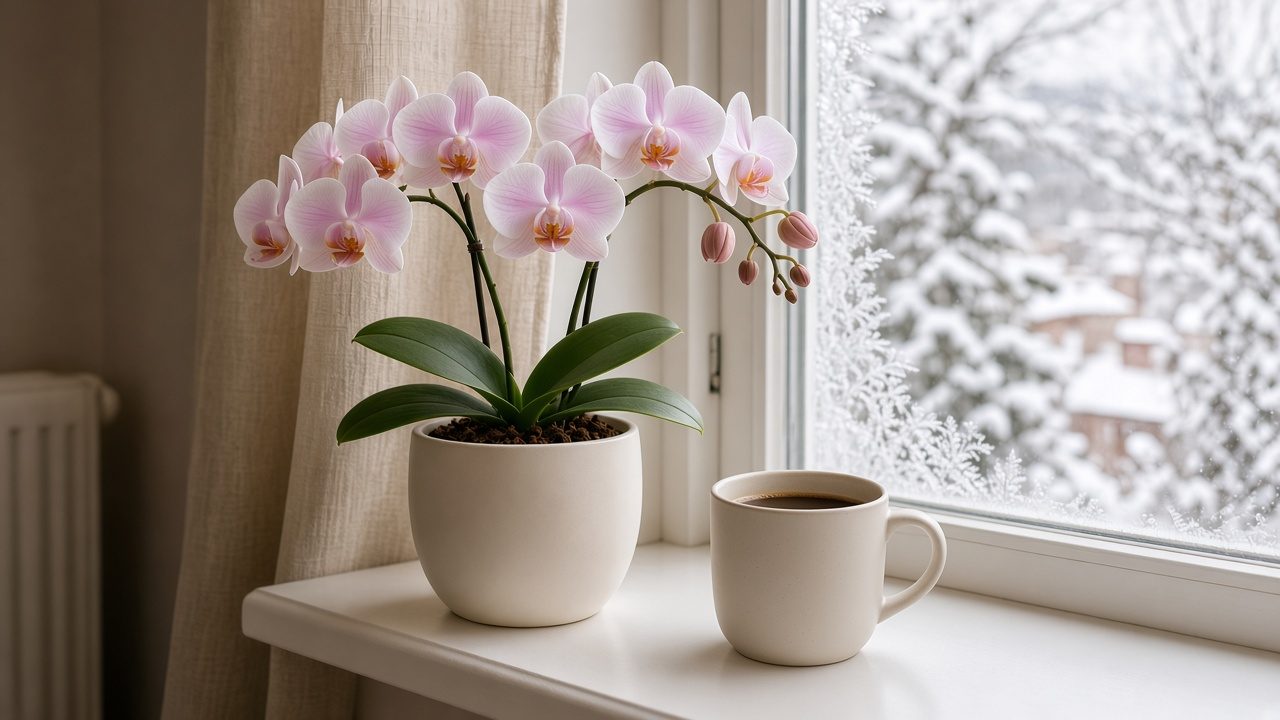
The radiators are on and the windows have started to fog up. Winter is a tough season for many plants, but for Phalaenopsis orchids it's blooming season. In our greenhouses in Yalova, these months are the most colorful time of the year.
Still, conditions at home are different from a greenhouse. Short days, dry air from the heating and cold windowpanes can put stress on your orchid. In this guide, built on 75 years of floristry experience, we walk you through winter orchid care in five steps. If you don't have an orchid yet, explore our winter-blooming orchids.
Why Is Winter Orchid Blooming Season?
Phalaenopsis orchids start forming new flower spikes in autumn, when the temperature difference between day and night grows. That's why November to February is the showiest time of year for many orchids. During these months the plant puts most of its energy into its flowers; avoiding big changes and keeping your care consistent helps the blooms last longer.
5 Essential Steps for Winter Orchid Care
1. Light: Choose the Right Window
In winter the days get shorter and light becomes precious. Place your orchid near a bright east- or west-facing window. A south-facing window also works in winter; just soften the midday light with a sheer curtain. Direct, scorching sun can leave marks on the leaves, while a dark corner can cause the flowers to drop early.
Medium or light green leaves mean the light is right, very dark green leaves point to too little light, and yellowish leaves point to too much. If the flower spike is clearly leaning toward the window, the plant is looking for more light. Even keeping the glass clean lets more light in.
2. Watering: Check the Roots, Not the Calendar
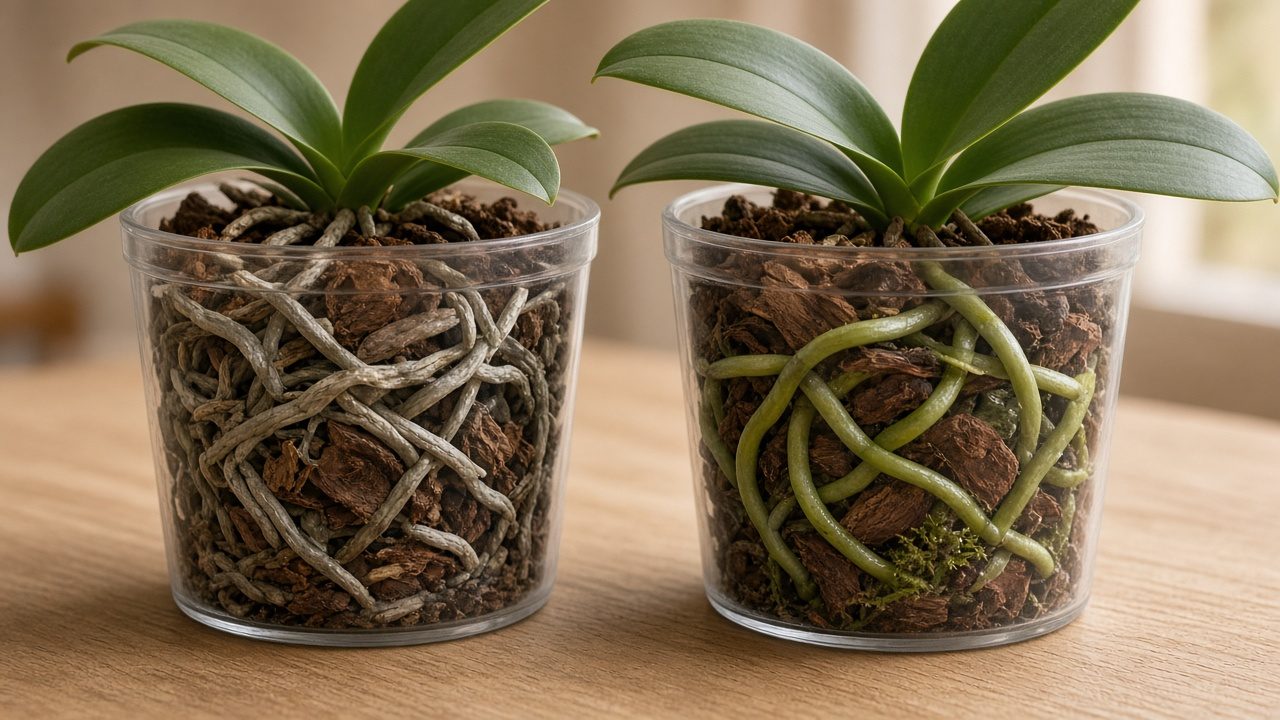
The most common winter mistake is overwatering. Because evaporation slows down, your orchid usually needs water every 10–14 days, but the real guide is the roots. In a clear pot, it's time to water when the roots turn silvery-gray; green roots mean they're still moist. In an opaque pot, check the weight: if it feels lighter, watering time is near.
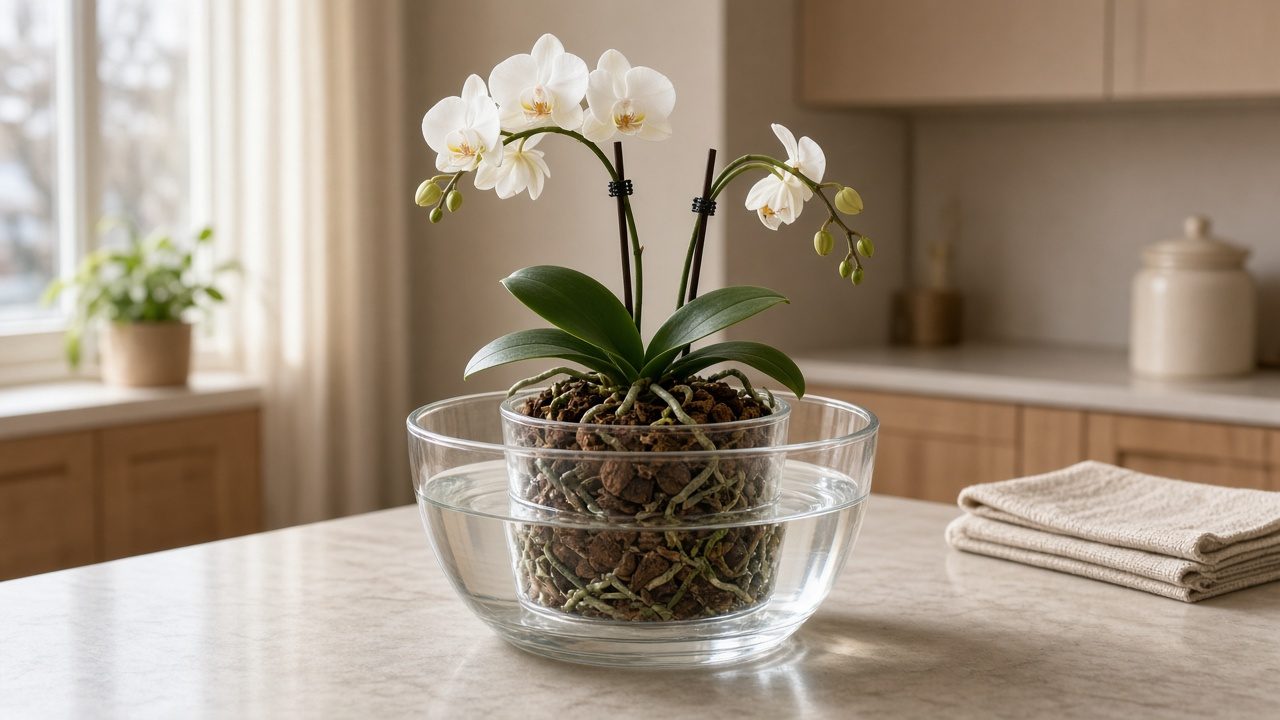
The healthiest method is soaking. Place the pot in a container filled with room-temperature water, leave it for about 15 minutes, then let the excess water drain completely. Don't leave water in the saucer; roots that sit in water will rot.
3. Temperature: Keep Away from Radiators and Cold Glass
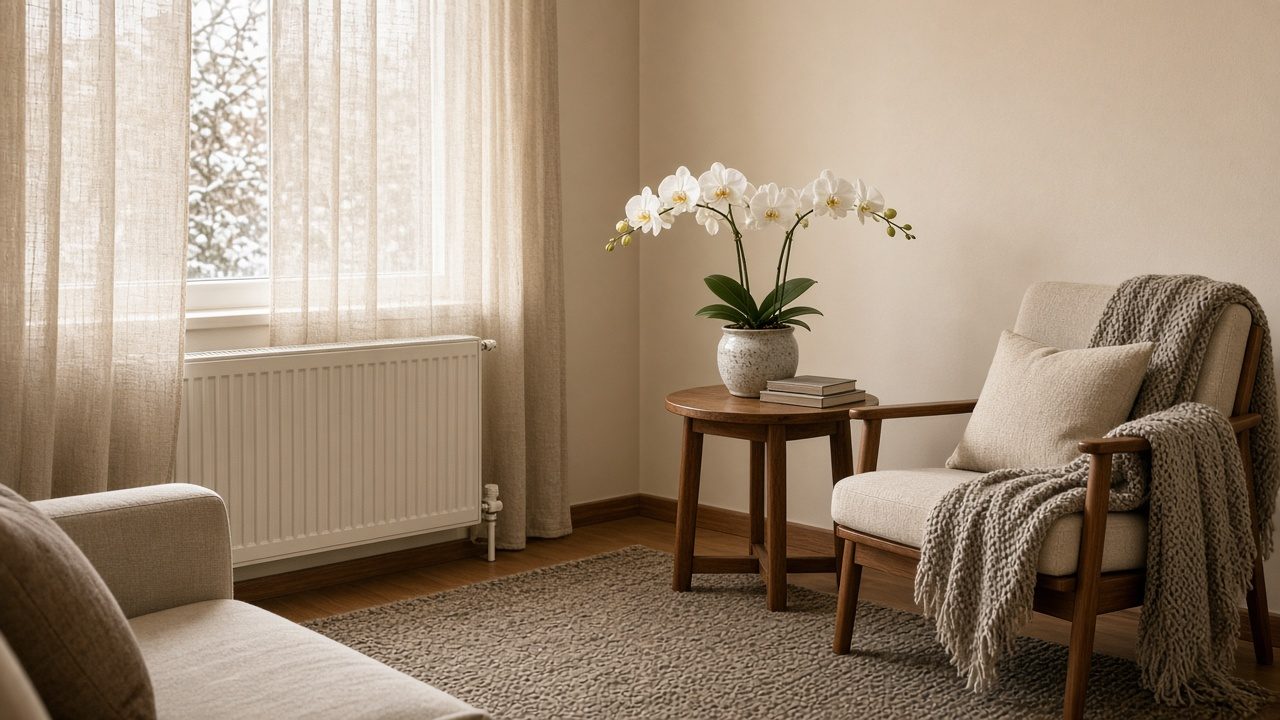
Orchids love a warm, steady environment. Don't place your plant on top of or right next to a radiator; hot air dries out the leaves and buds. Leaves touching a windowpane that gets cold at night can also be damaged. Spots with cold drafts, such as near a door, can cause buds to drop; when airing out the room, move your orchid a little away from the window.
A slight temperature difference between day and night is beneficial, but sudden, sharp changes stress the plant. Not overheating the room is a good balance for both your plant and your energy bill.
4. Humidity: Balance the Dry Air from Heating
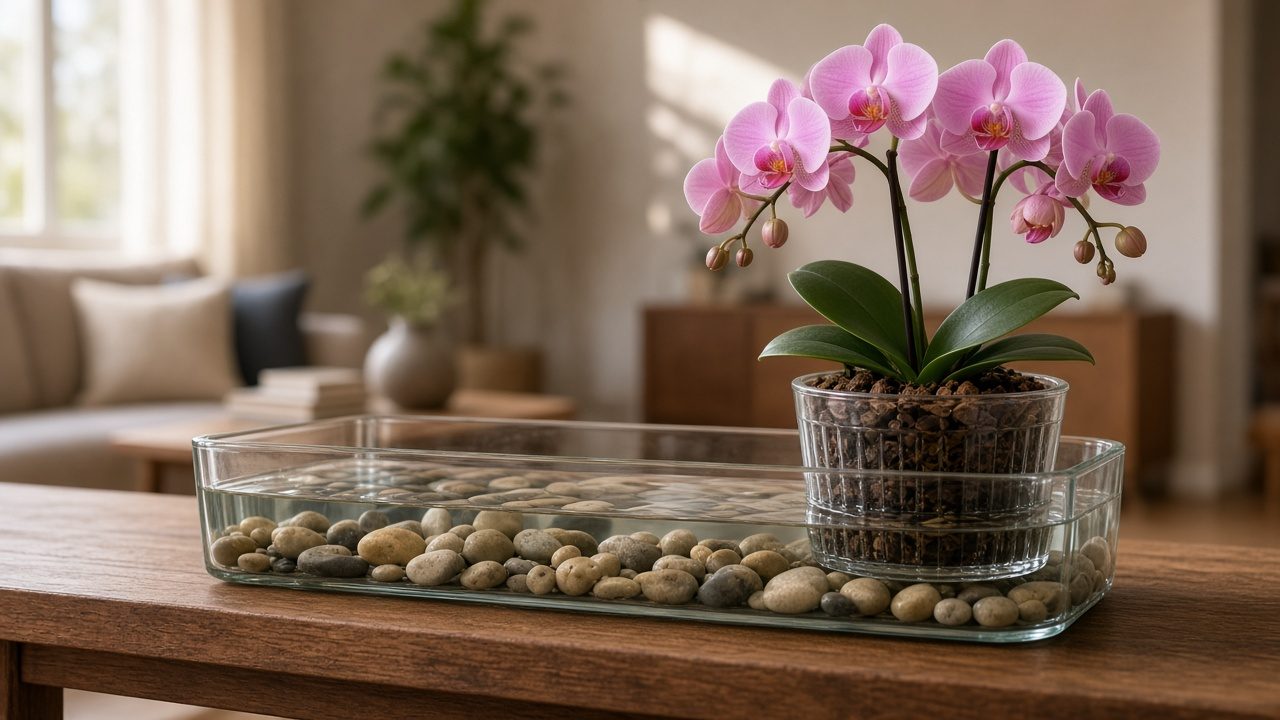
During heating season the air at home gets dry, while orchids prefer moderate humidity. Place the pot on a tray with pebbles and a little water; the bottom of the pot should not touch the water. Grouping a few plants together also raises humidity. Don't mist the leaves often; water that collects where the leaves meet the stem can lead to rot.
If you'd like to make your own humidity tray in a few minutes, take a look at our guide on how to make a humidity tray and our step-by-step video.
Video : How to Make a Humidity Tray?
Dry leaf tips, wrinkled leaves or buds that turn yellow and drop before opening can be signs that the air is too dry. For more details, see our article on why orchid buds dry out
5. Placement: Orchids Love Routine
Orchids don't like being moved around. Suddenly moving a blooming orchid to a room with different light and temperature can cause its buds to drop. Once you find the right spot, leave your plant there; if you need to turn the pot, keep the flower spike facing the light. Don't repot in winter; the best time is after blooming has finished.
3 Common Winter Orchid Care Mistakes
Watering on a fixed weekly schedule: Watering without checking the roots leads to rot.
Placing it next to the radiator: The warmest spot is the driest spot for an orchid.
Giving up when the flowers drop: Losing flowers is natural; with the right care, your orchid will bloom again.
Spending a few minutes once a week checking the roots, leaves and buds helps you spot problems early.
The Most Beautiful Winter Gift: An Orchid
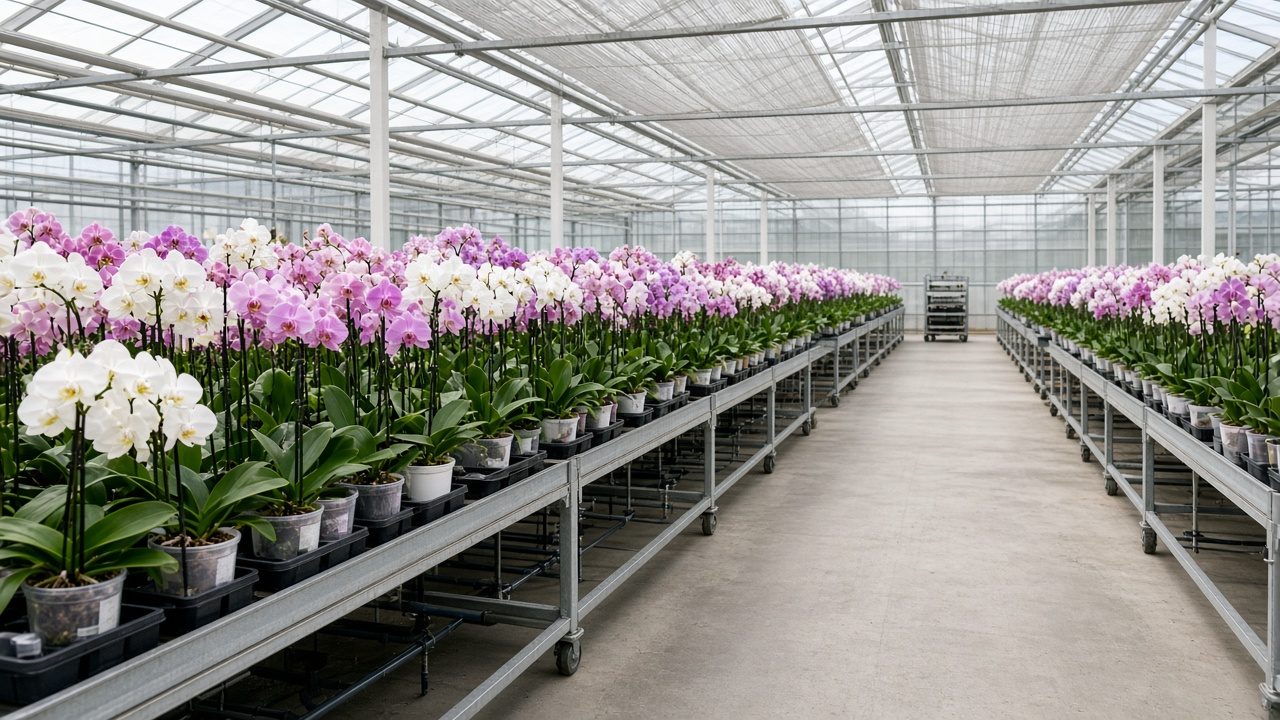
On New Year's and Valentine's Day, cut flowers wilt within a few days, while a well-cared-for Phalaenopsis stays in bloom for weeks, even months. Take a look at our gift orchids, carefully packed in our greenhouses in Yalova.
Frequently Asked Questions About Winter Orchid Care
Should I fertilize my orchid in winter?
Yes, but sparingly: once a month, at half the recommended dose of orchid fertilizer.
Should I cut the spike after the flowers drop?
If the spike is green, you can leave it; it may bloom again. If it has dried out and turned brown, cut it off at the base.
What is the ideal winter temperature for an orchid?
18–24 °C during the day and 15–18 °C at night.
Should I repot my orchid in winter?
No, wait until blooming has finished.
We're With You All Winter
Noticed a problem with your orchid? The "What's wrong with my orchid?" page on soloplant.com guides you based on leaf, root and flower symptoms. You'll find more guides in our Care Center, and you can download our care card to keep the basic steps close at hand. You can also send your questions to our Instagram account, @soloplant. This winter, may your orchid bloom just like it does in our greenhouses in Yalova. From Yalova, with care.
Comments